
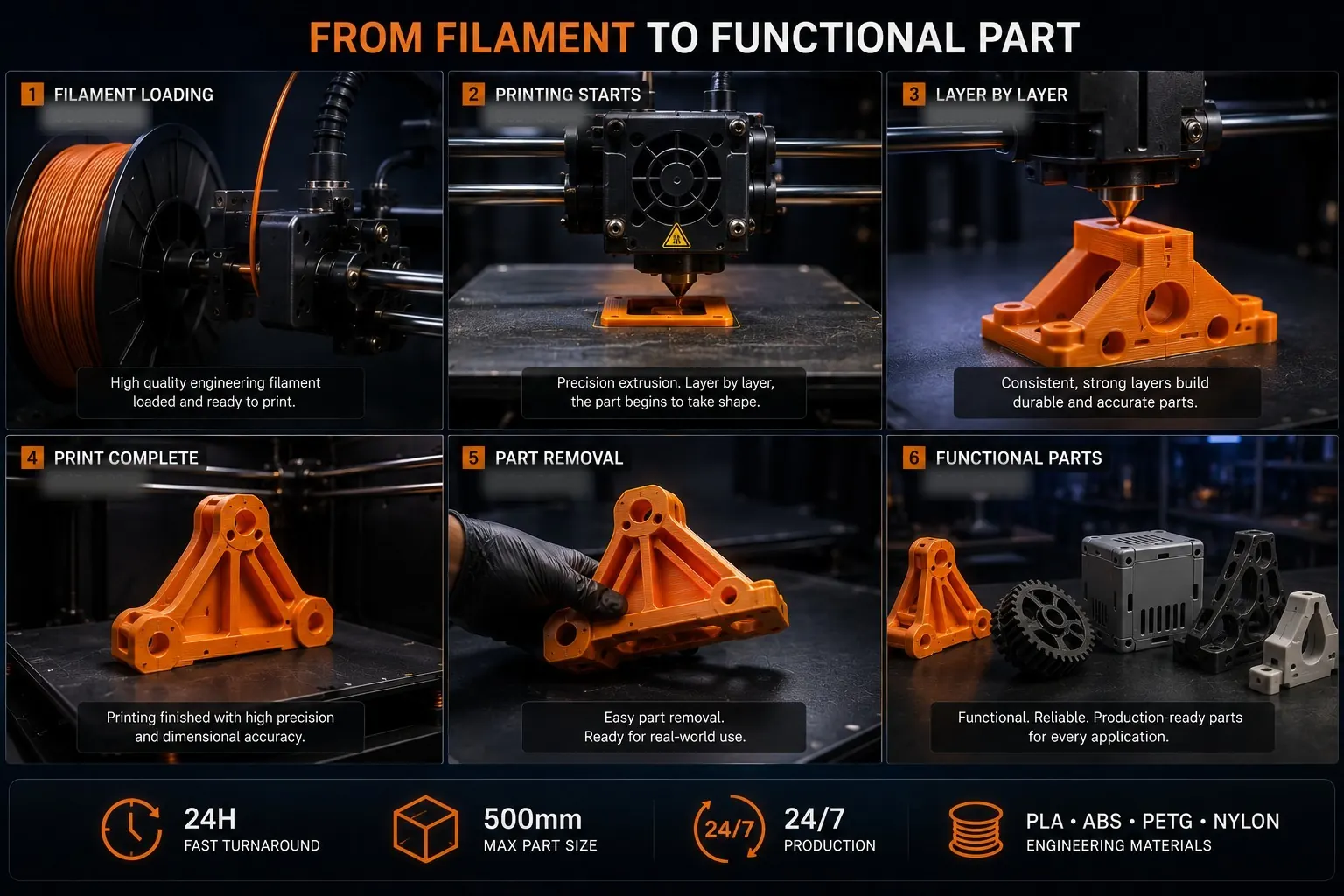
FDM and SLA are two of the most useful technologies for rapid prototyping, but they solve different problems. FDM builds parts by depositing thermoplastic filament layer by layer, while SLA cures liquid resin with light to create highly detailed parts.
FDM: practical and production-friendly
FDM is a strong choice when you need functional prototypes, larger parts, quick iterations or economical production in engineering thermoplastics. It is also useful when the finished part will be handled, assembled or tested repeatedly.
SLA: detail and surface finish
SLA is particularly useful for presentation models, small intricate components, masters, jigs and parts where fine features and a smooth surface matter. Resin selection can also provide different combinations of toughness, flexibility and castability.
How do they compare?
- Detail: SLA generally captures smaller features and produces smoother surfaces.
- Functional use: FDM offers a broad range of engineering thermoplastics and is often practical for functional prototypes.
- Part size: FDM is commonly suited to larger, more utilitarian parts.
- Finishing: SLA parts can need support removal and post-curing; FDM parts may show visible layer lines.
- Cost: The best value depends on part size, material, quantity and required finish.
Which should you choose?
Start with the part's purpose. Choose FDM when durability, size and practical iteration are priorities. Choose SLA when fine detail, appearance and surface quality are central to the job. If you are unsure, share your CAD file and application requirements with HyCube Works and we can help you select a suitable process.
Have a part to manufacture?
Share your CAD file, quantity and requirements with HyCube Works for 3D printing, fabrication or digital manufacturing support.
Get a Quote →